Introducing the types of electrical network fittings and their role in overhead distribution lines
Introduction and vital importance
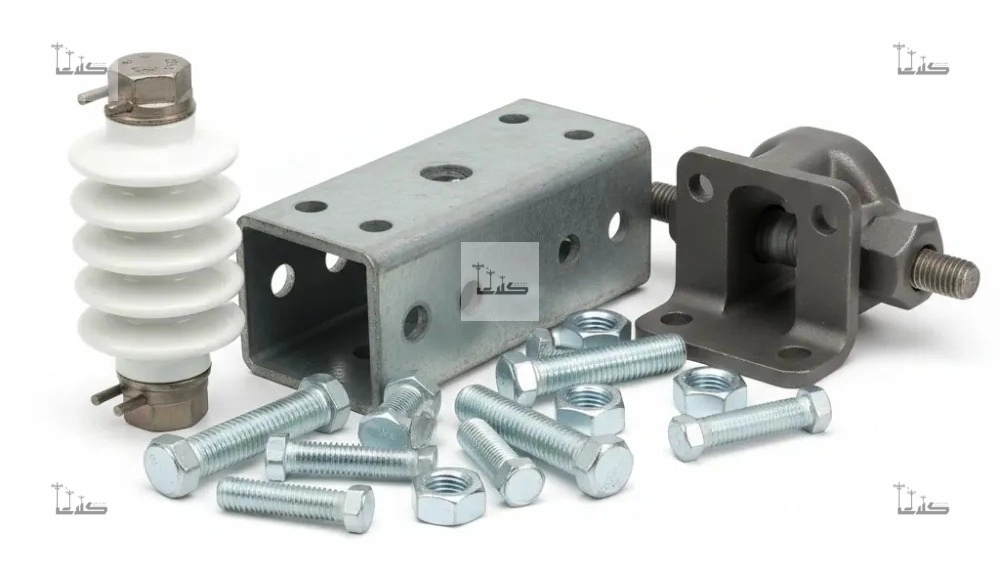
Power grid fittings are the backbone of stability and proper operation of overhead distribution lines. These metal and insulating equipment are responsible for connecting conductors, installing insulators, bearing mechanical forces, and finally, maintaining the safety of the network. The quality of these fittings directly affects the amount of blackouts and network maintenance costs, and their selection should be done carefully and based on technical standards.
Key components of the system
The most important components of this system are crossarms (which are the arms that hold the lines), top of the beams (to connect the insulators to the top of the beam), types of insulators (to insulate the conductors from the beam) and self-supporting braces (to end the lines and maintain mechanical tension). These parts must not only have high mechanical strength, but must also be resistant to environmental factors such as humidity, UV rays, and temperature changes in order to prevent errors in sensitive networks.
A solution for supplying electricity
Klat Barq, realizing the vital importance of these equipments, distributes a complete set of electrical network fittings, guaranteeing product authenticity and fully complying with international standards. We believe that providing high-quality and engineered equipment is the main key to ensure the long life and flawless operation of distribution lines in Iran's harsh weather conditions. For any network development or maintenance project, Kalat Electric is ready to provide the most up-to-date and high-quality fittings so that you can feel comfortable about the quality of connection and transmission.