
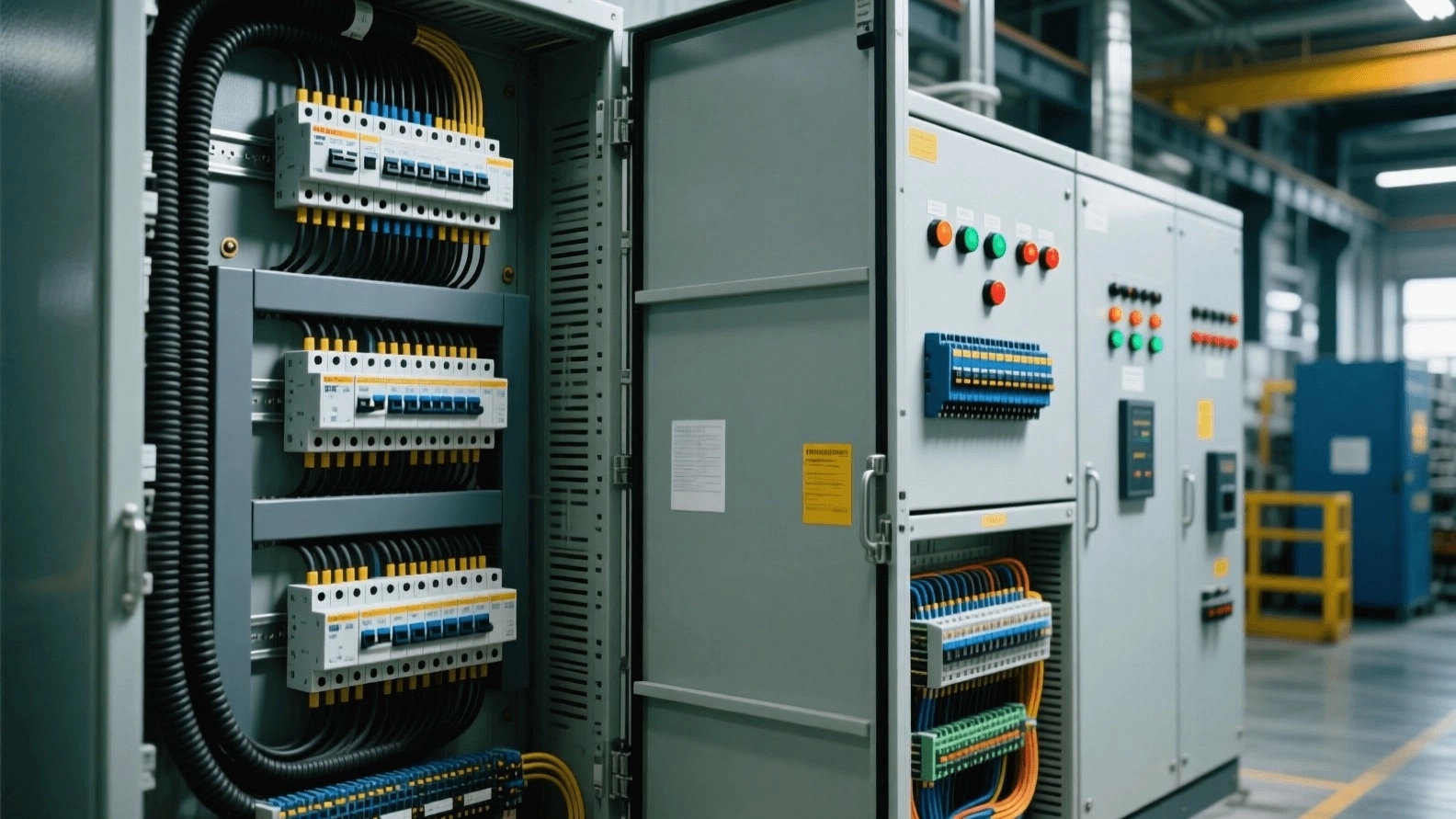
The difference between power and control panels in industrial circuits
Industrial switchboards are the heart of energy production and distribution systems. If we look at factories, sheds or power stations, almost all of them have two types of panels: power panel and control panel. Although these two work side by side, their functions, design and internal components are completely different. Knowing their difference allows engineers and industrial owners to choose and buy more suitable and safer equipment for their projects.
Power switchboard is responsible for distributing and moving high currents in the circuit. In these panels, energy disconnection and connection, protection against overload, short circuit and voltage drop are performed. Its design usually includes MCCB, ACB, fuses, thick copper busbars, high voltage cables and safety earthing system. High power consumption and high current make the use of high standard parts and suitable ventilation space in the construction of the power panel. These boards are mostly installed in the main power input of the factory or the central distribution board to deliver raw power to different parts.
On the other hand, the electrical control board is responsible for commanding and regulating the operation of electrical equipment. It means that it does not pass a lot of current, but it manages logic and control circuits. Its internal components include PLCs, controllers, relays, timers, selector switches, command terminals and signal lights. The role of the control board is to direct the current in certain directions, turn the motors on or off according to the schedule and intelligently control the production line. In simple words, the power board provides "energy" and the control board forms the "intelligence" of the system.
In terms of construction and installation, control panels are usually slimmer, lighter and have more organized wiring. Instead, power boards are made with thick cables, heavy fuses, and large busbars. When designing an industrial power project, electrical engineers first draw the power circuit to determine the feeding path, then add the control circuit to adjust the equipment's performance at the command level. Both panels should be designed according to IEC standards and a complete isolation system should be established between them so that noise or overvoltage does not spread to the command section.
In practice, the correct choice between power and control panels depends on the type of consumption, network capacity and equipment use. If the goal is to transfer high power, the power panel is more economical; But if we need programming, automation and remote control, the control panel works smarter and more accurately. In many large projects, companies such as Bargh Kalat (barghkalat.ir) provide a combination of both types of panels. They give—the power panel for the main power supply of the system and the control panel for managing the performance of the equipment.
Finally, recognizing the difference between these two types of electrical panels will reduce installation errors, increase equipment life, and significantly save on repair costs. So, if you are designing or buying a panel, be sure to know the type of need of your industrial network so that you can make a safe, secure choice according to today's standards.