Low pressure self-supporting cable for lighting
Lightning from the sky, light on earth
This cable is a new generation of urban light power transmission systems that maintains its entire structure in the air without the need for a separate support wire. The result? Faster installation, more safety, neater appearance and lower cost for urban, rural and industrial electrification projects.
⚙️ What is a self-supporting cable?
In simple words, self-supporting cable is a type of insulated multi-core cable that can carry its own weight. In traditional overhead systems, electricity ran through bare wires that required a separate steel wire for maintenance.
But the new technology has made the string of Messenger (carrier or holder) be placed inside the cable itself. Therefore, the cable is stretched independently between the electric poles and forms an orderly and safe set.
These cables usually include the following components:
- Conductors: made of non-annealed aluminum with high conductivity.
- Retaining string: made of aluminum alloy with high mechanical strength.
- Insulation: made of XLPE or PE, resistant to UV rays, moisture and temperature changes.
- Coating or protective tape: for mechanical resistance against tension, wind and other Damages.
💡 Applications of weak pressure self-supporting cable in lighting
In urban lighting systems, the main task of these cables is to supply electricity to street lights, parks, green spaces and paths between houses.
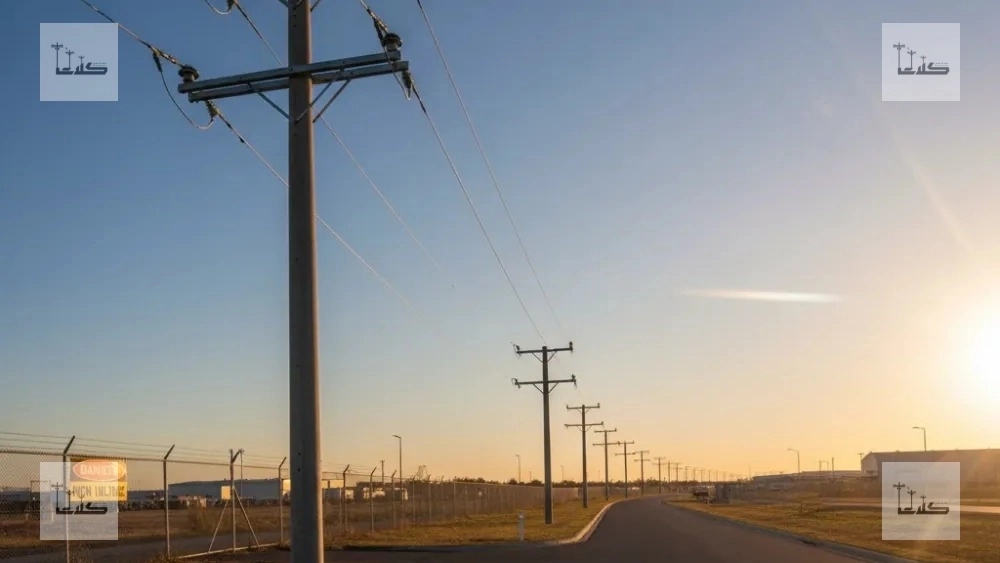
The important feature of self-supporting cables is that they are used in long and outdoor routes without the need for ground channeling.
Their main use is in the following cases:
- Power supply for street and park lights
- Creating rural or intercity lighting network
- Power supply for outdoor industrial projects
- Temporary or permanent installation in workshops and outdoor exhibitions
⚡ Advantages of using low pressure self-supporting cable
- High safety: The insulation of all strands reduces the risk of electric shock to almost zero.
- Simple and quick installation: They do not require a separate cable holder, so manpower and implementation time are reduced.
- Long durability: Resistance to UV, rain, wind, snow and pollution. atmosphere.
- Lower cost: due to the elimination of steel wire and reduced installation equipment.
- More beauty: more orderly appearance than old bare wires.
- Reduction of wrong connections: due to standard distance between conductors and precise design.
📏 How to install and implementation principles
The installation of self-supporting cables should be done according to the national standard in order to maintain the safety of the network and increase the life of the cable.
Standard installation steps:
- Determining the path and distance between beams (usually 40 to 50 meters apart).
- Installing special clamps and restraints.
- Regarding the minimum height from the ground (5 to 5.5 meters for passages).
- Preventing direct contact of the cable with structures or tree branches. Waterproof.
- Earthing test and insulation test after installation.
- Following these steps increases the useful life of the cable up to two times and reduces the possibility of network failure.
🧠 Important points of cable selection for lighting projects
When buying and designing a network, it is important to pay attention to several factors:
- Insulation material: XLPE resistant to UV and heat.
- Conductor size: to be selected based on current consumption and path length (e.g. 16mm² for urban routes).
- Reputable brand: such as Simco, Afsharnjad Khorasan, Abhar, Alborz Electric.
- Production standard: ISIRI **** or IEC *****.
- Environmental conditions: Wet or coastal areas require more resistant insulation.
- Installation type: Static or suspended, with metal or reinforced polymer fasteners.
Related standards
Self-supporting lighting cables must be manufactured and tested according to the following international standards:
- ISIRI **** – Iranian national standard for low pressure aerial cables
- IEC ***** – International standard for power cables with thermoplastic insulation
- Insulation and mechanical resistance test (Hi-Pot test)
- UV test, high temperature and humidity cycle for long-term operation in the open environment
The role of self-supporting cable in the future of urban lighting
These cables not only increase safety, but also replace the old aerial wiring with a modern and neat look.
Klat Electricity has also played an effective role in supplying these cables for urban and rural projects with its supply and expert advice.
Kalat Electric Company
The low air pressure self-supporting cable for lighting is the symbol of the new generation of urban electrification;
From the sky to the ground, from the pole to the street lamp, it creates a safe and orderly path for the light of our nights.
These cables are the best option for urban, industrial and even private villa projects with their multi-purpose design, great resistance, and low cost.